
Highway Soft Surface Probable Cause
- Date: 06/22/2011
- Project Type: Construction Phases
Highway Soft Surface Probable Cause Determination
Challenge
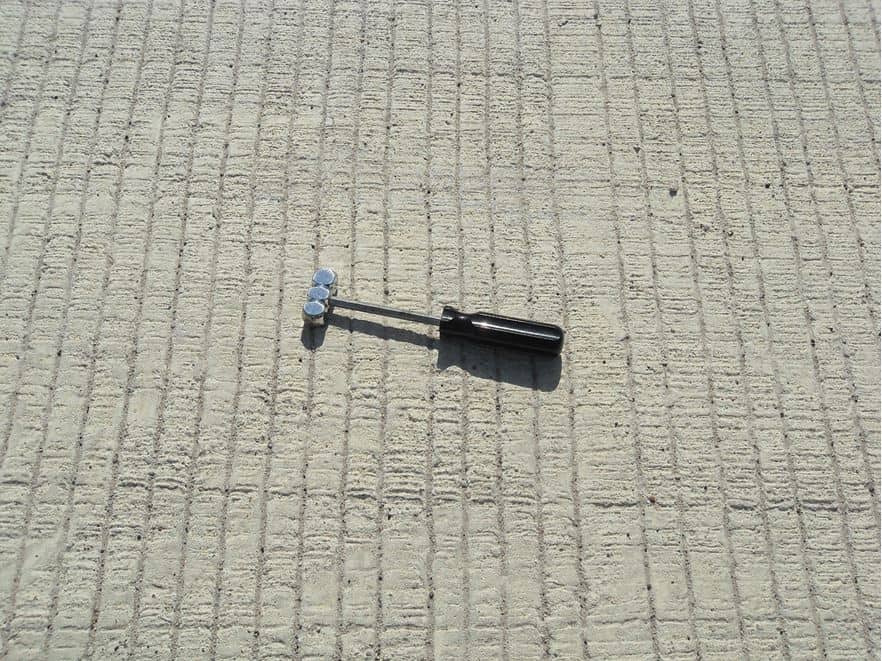
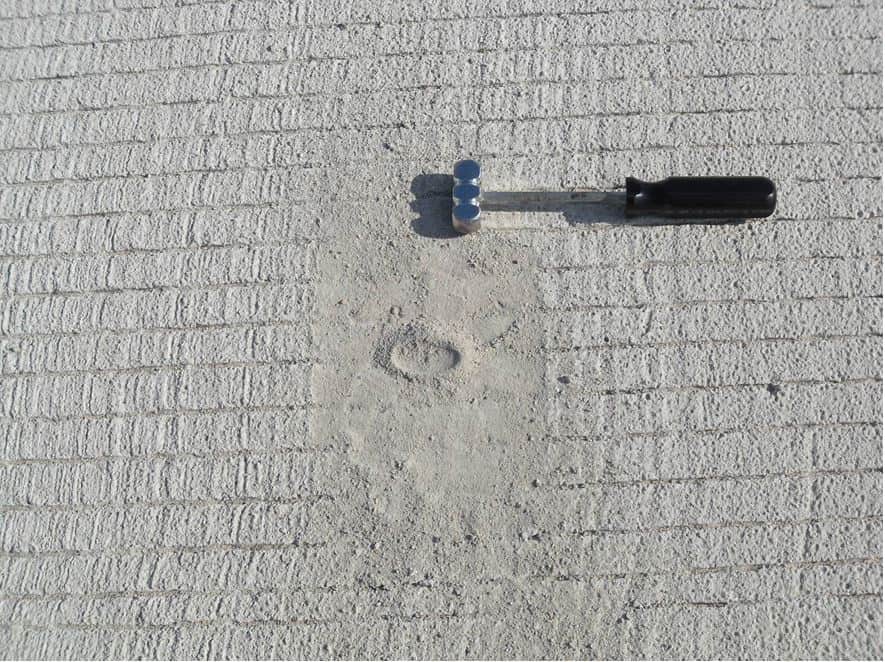
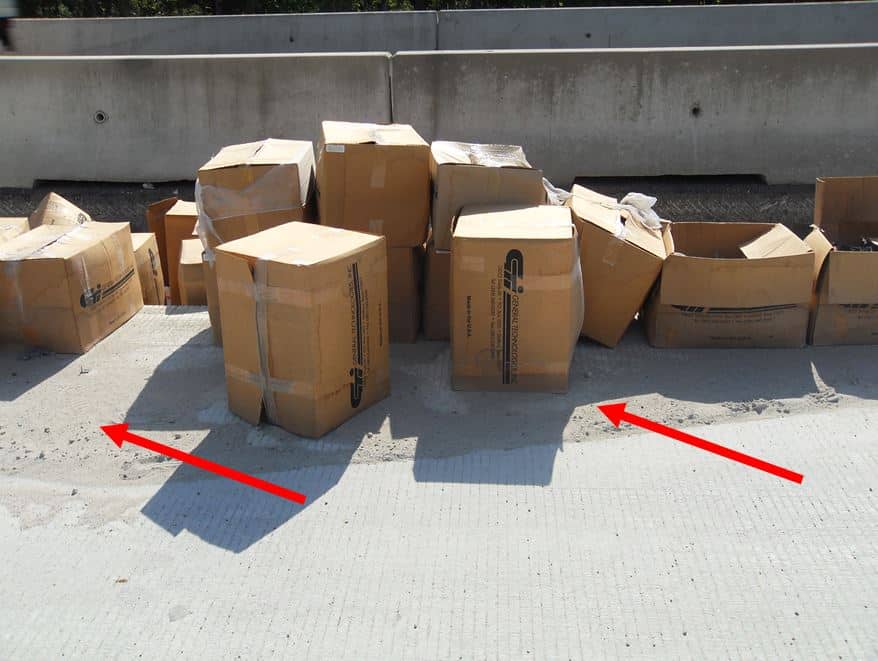
During construction of Interstate 45 north of Houston near Conroe, sections of newly placed concrete developed a soft, friable surface during nighttime placement. Sand particles were being removed from the pavement surface and blown against the barrier wall, while other sections placed during the day remained durable.
C3S, Inc. was engaged to investigate the condition and determine the probable cause of the soft pavement surface.

Services Performed
- Inspection of affected and well-performing pavement areas.
- Collection of concrete samples from affected and durable surfaces.
- Comparative laboratory examination of the samples.
- Evaluation of differences between nighttime and daytime concrete placement.
- Determination of the probable cause of surface deterioration.
Tests Performed
(1) Scanning electron microscopy and
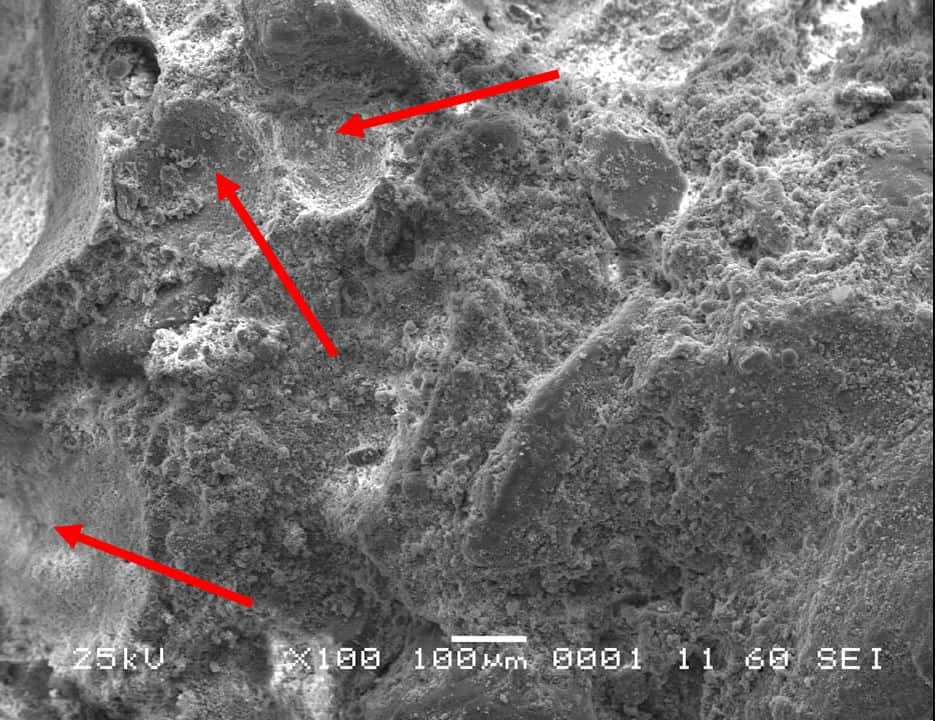
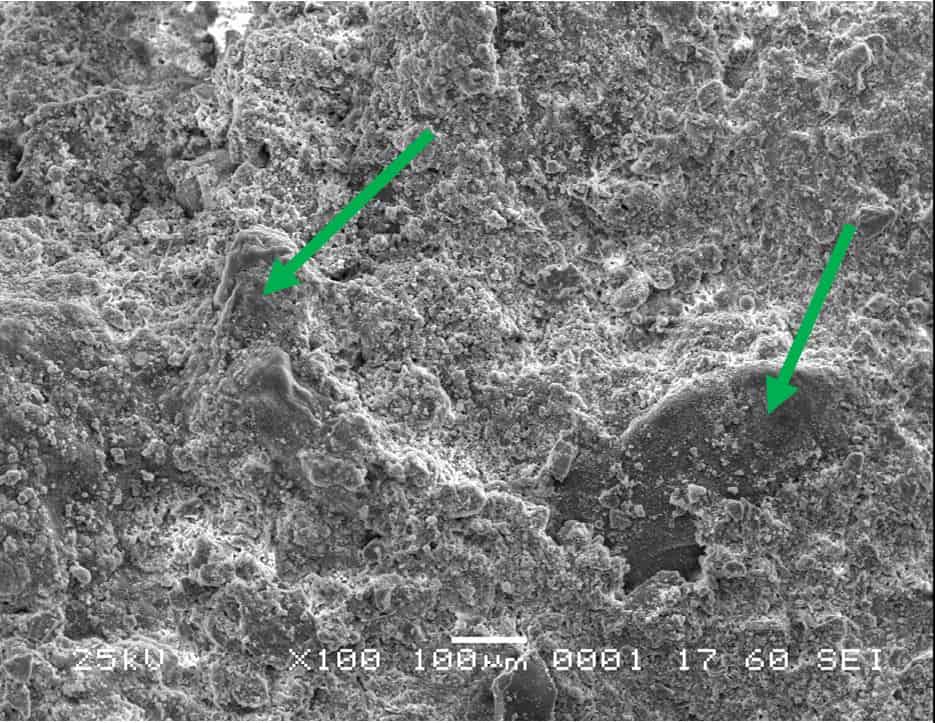
(2) X-ray diffraction was performed on both samples – from the affected area and from the well-performing surface.
Findings
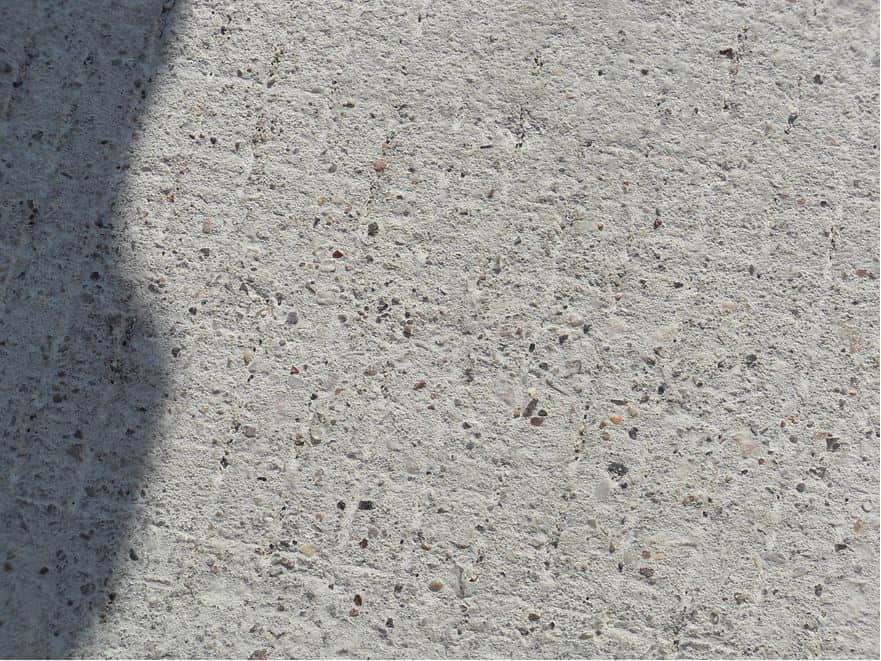
The affected nighttime concrete showed significant loss of surface sand particles and a friable surface that could be easily powdered or dislodged. In contrast, the daytime placement retained its surface aggregate and exhibited a durable, well-bonded surface.
Microscopic examination identified differences between the affected and durable surfaces, including the degree to which sand particles remained embedded in the cementitious surface.
The investigation indicated that nighttime wind conditions contributed to excessive moisture loss from the freshly placed concrete surface. This adversely affected cement hydration, particularly the hydration of alite and belite phases responsible for developing the cement paste’s bonding characteristics.
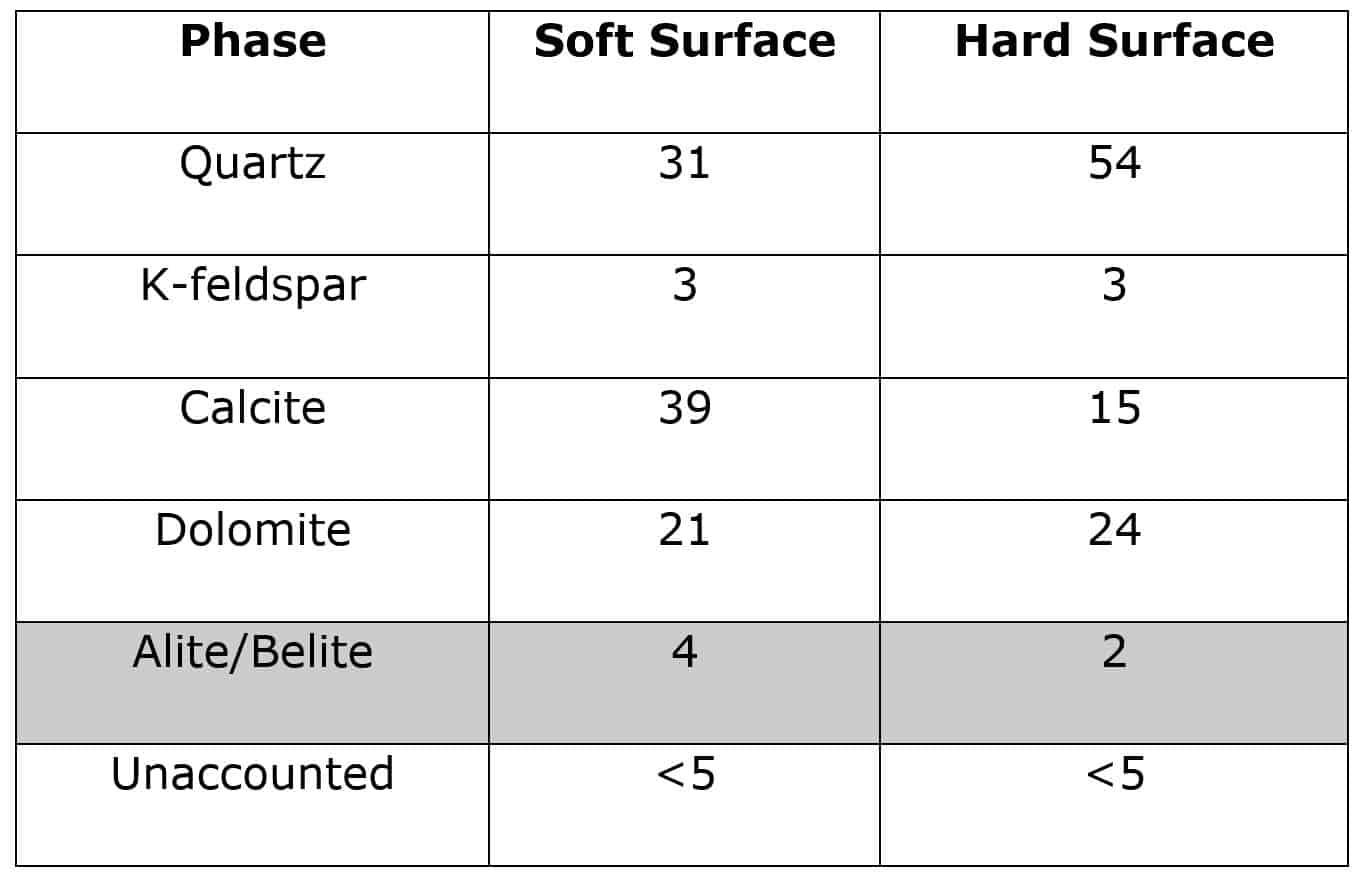
Winds blowing in the night stripped off moisture from the surface adversely affecting the hydration of the alites and belite, in the cement, to hold the particles bonded to the surface.
Outcome
C3S, Inc. determined that the probable cause of the soft pavement surface was moisture loss from freshly placed nighttime concrete caused by wind exposure. This moisture loss interfered with adequate cement hydration and reduced surface bonding.
The investigation provided the project team with a technical basis for understanding the difference in performance between the nighttime and daytime concrete placements.
Featured Services:
- Concrete Failure Investigation
- SEM Analysis
- XRD Analysis
- Comparative Materials Analysis
- Probable Cause Determination
Get Expert Answers for Your Concrete Challenges
Not sure what’s causing your concrete issue? Our specialists provide clear, data-backed insights to help you make the right decision fast and confidently.

Consulting Engineers
Concrete Experts
CONTACT INFORMATION
C3S, Inc.
7100 Regency Square Blvd.
Suite 183
Houston, TX 77036