

The Evaluation of Blisters on Concrete Slab Project
- Date: October 2020
- Project Type: Maintenance/Forensic Phase
The Evaluation of Blisters on Concrete Slab Project
Challenge
Blisters developed across approximately 60% of a 20,000-square-foot commercial concrete slab less than two months after application of a proprietary moisture-mitigating seal coat carrying a 15-year warranty.
The stakeholders engaged C3S, Inc. to determine the cause of the premature blistering and evaluate the condition of the concrete slab and coating system.
Services Performed
C3S, INC. performed a condition assessment and collected:
- Samples of unused and premixed seal-coat material.
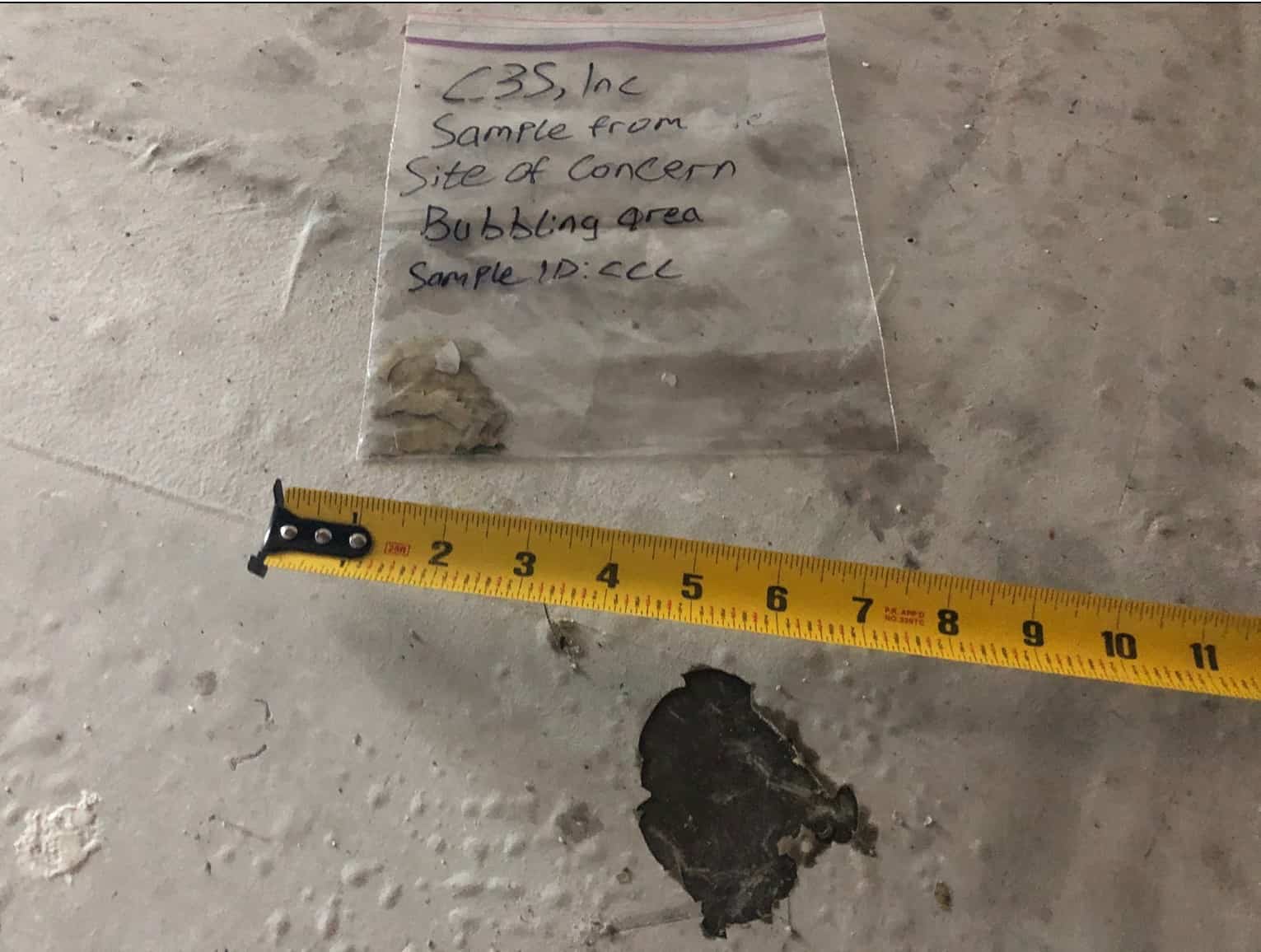
- Samples of seal coat from blistered and non-blistered areas.
- Liquid collected from within the blisters.
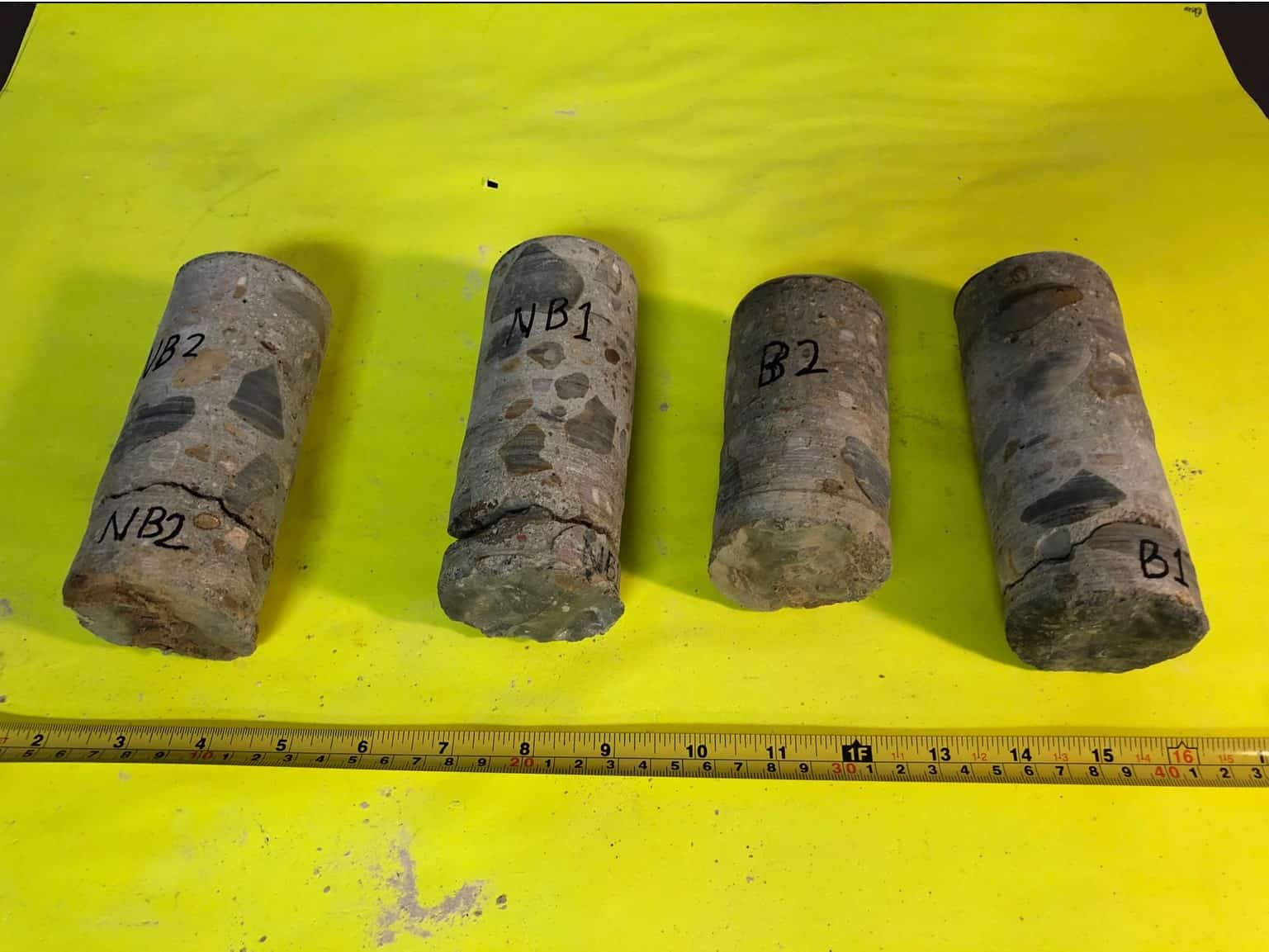
- Four concrete cores, including samples from blistered and non-blistered areas.
- Samples from a satisfactorily performing slab at another building for comparison.
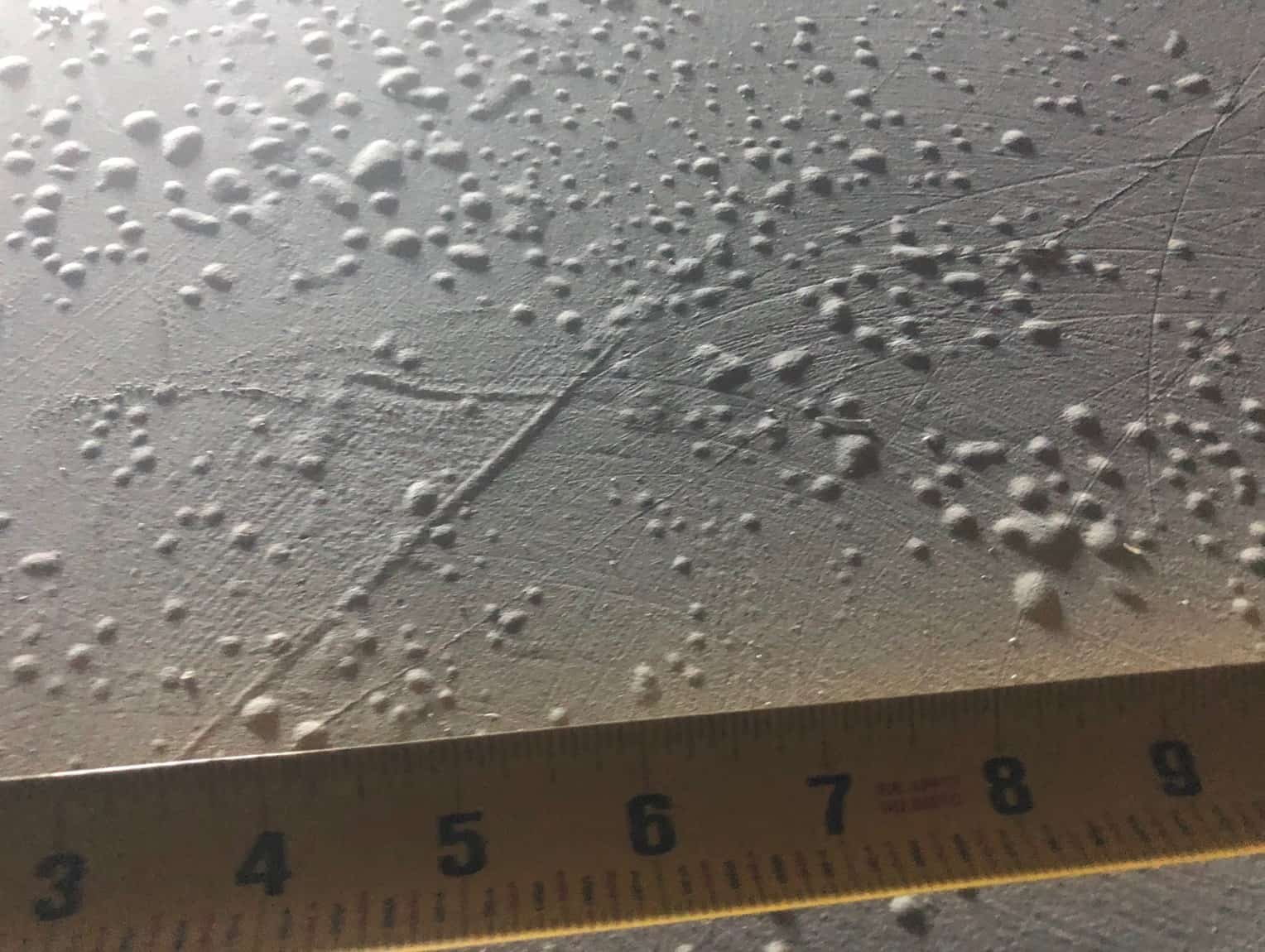
Unexplainable Blistering of Slab Coating
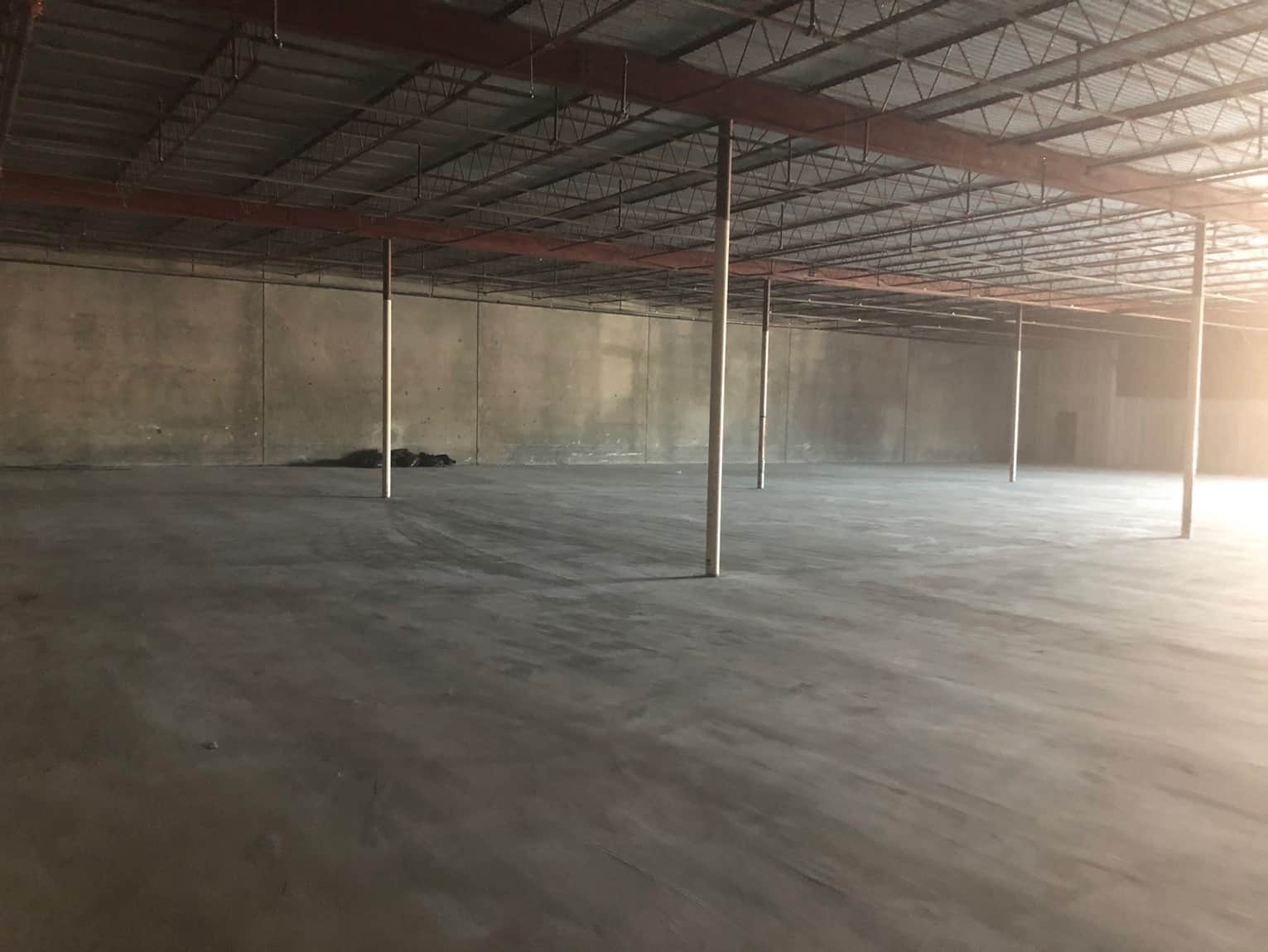
A. Shows a section of the 20,000 ft2 of concrete slab
Tests Performed:
The following tests were performed on the samples.
A. Microscopic evaluation of concrete sections.
B. Gas Chromatography Mass Spectrophotometry (GC-MS) on liquid extracted from Blisters.
C. Fourier-Transform Infrared spectroscopy (FTIR) performed on: 5 lab-proportioned mixes of the seal coat product, samples of coating from Blistered and Non-blistered areas of the slab and samples of coating from a satisfactorily performing slab at a different building.
Findings:
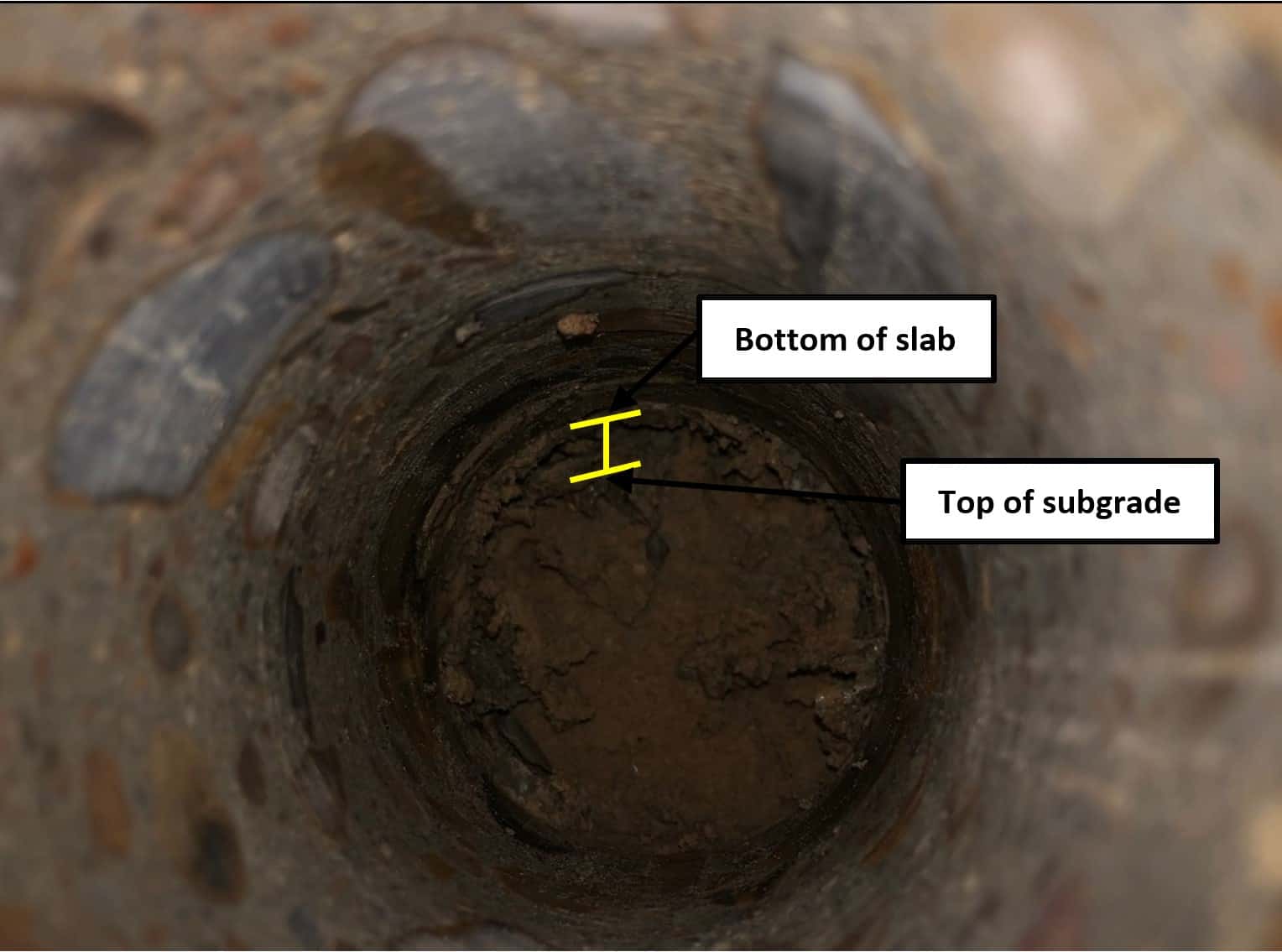
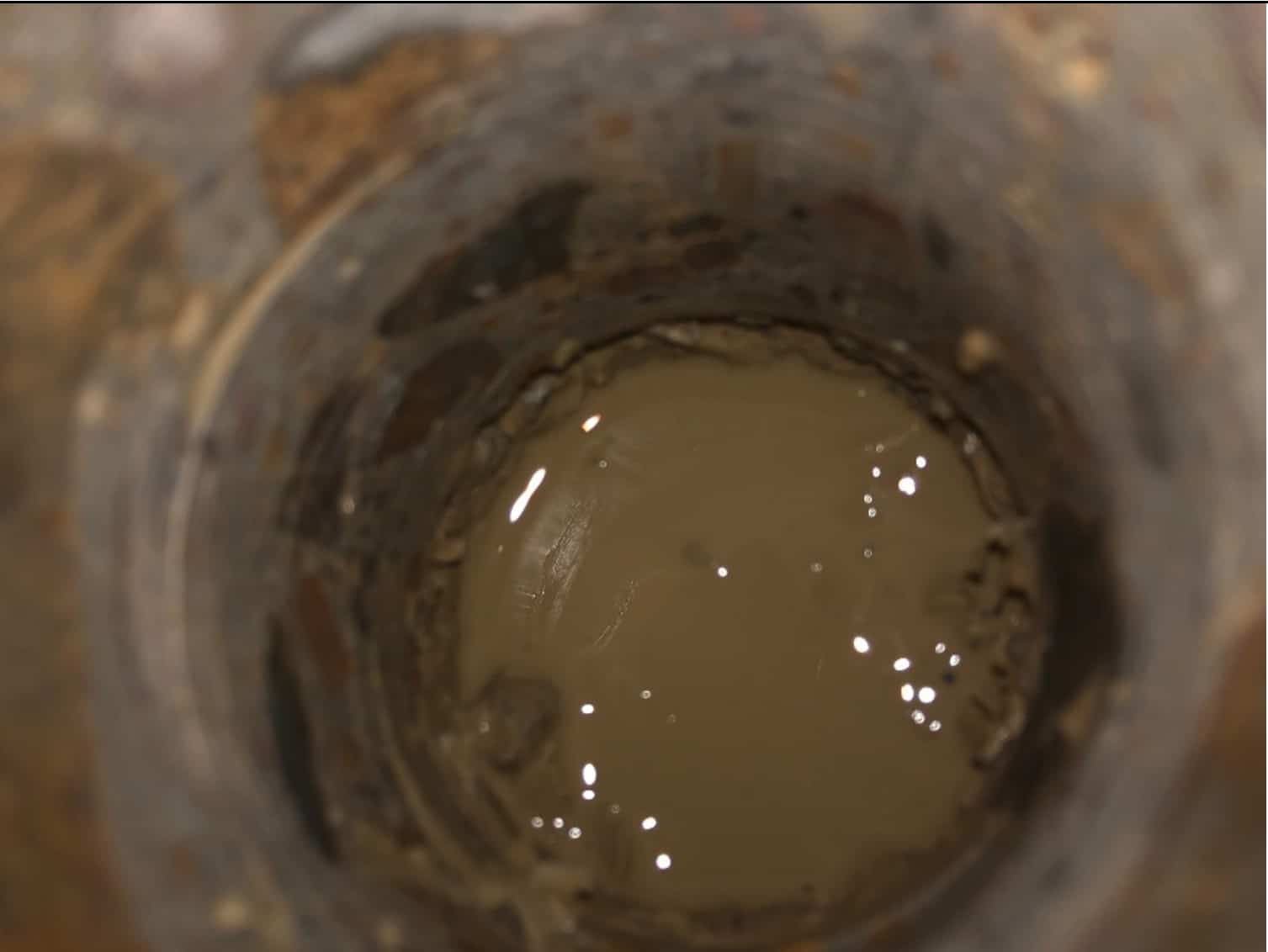
Observations during coring showed there was a ~ ¾” gap between the bottom of the slab and the top of the subgrade (see Figure E). Excessive moisture was noted in the void underneath the slab (see Figure F), which was a result of rain and poor drainage around the building foundation perimeter.
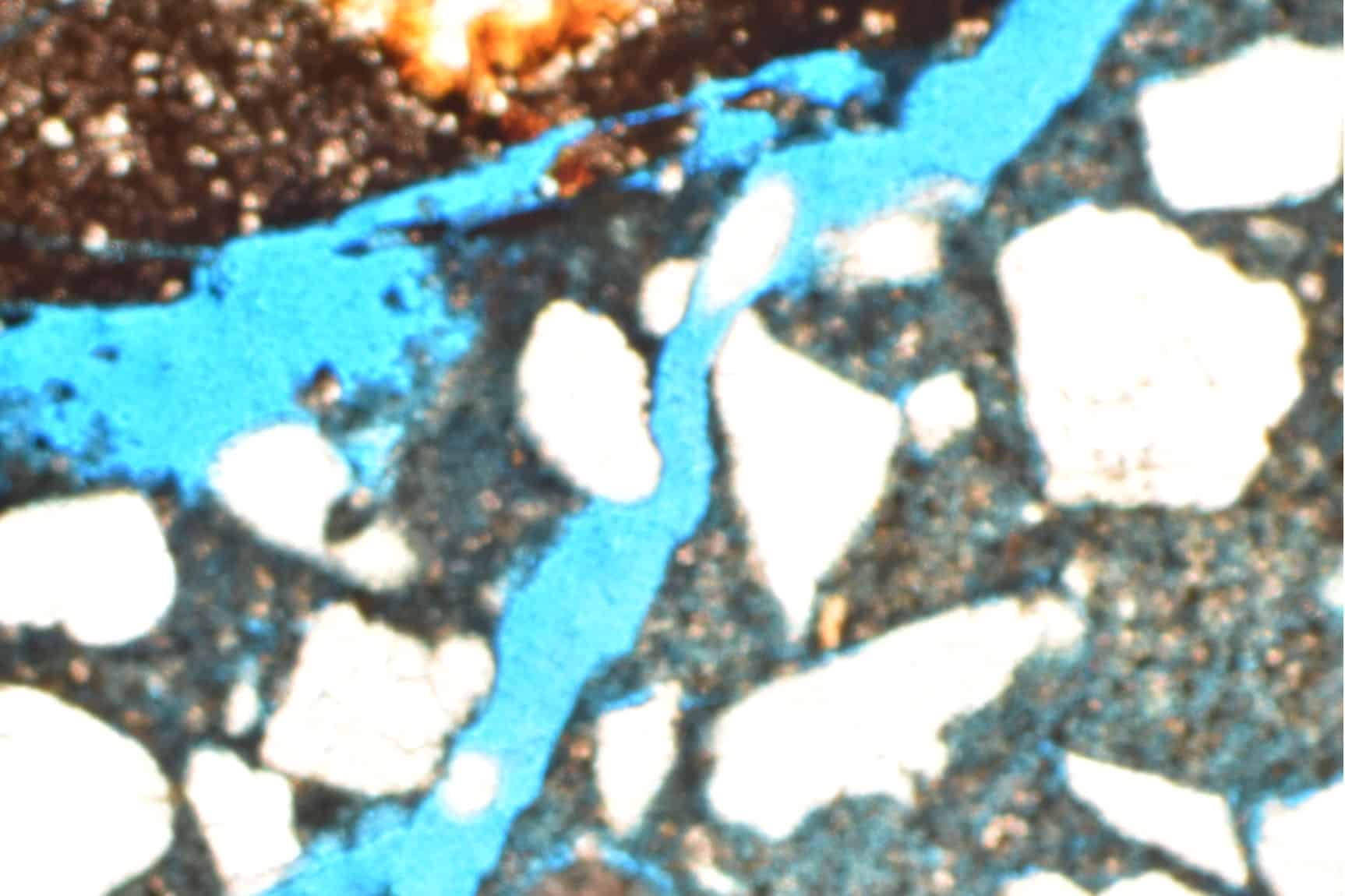
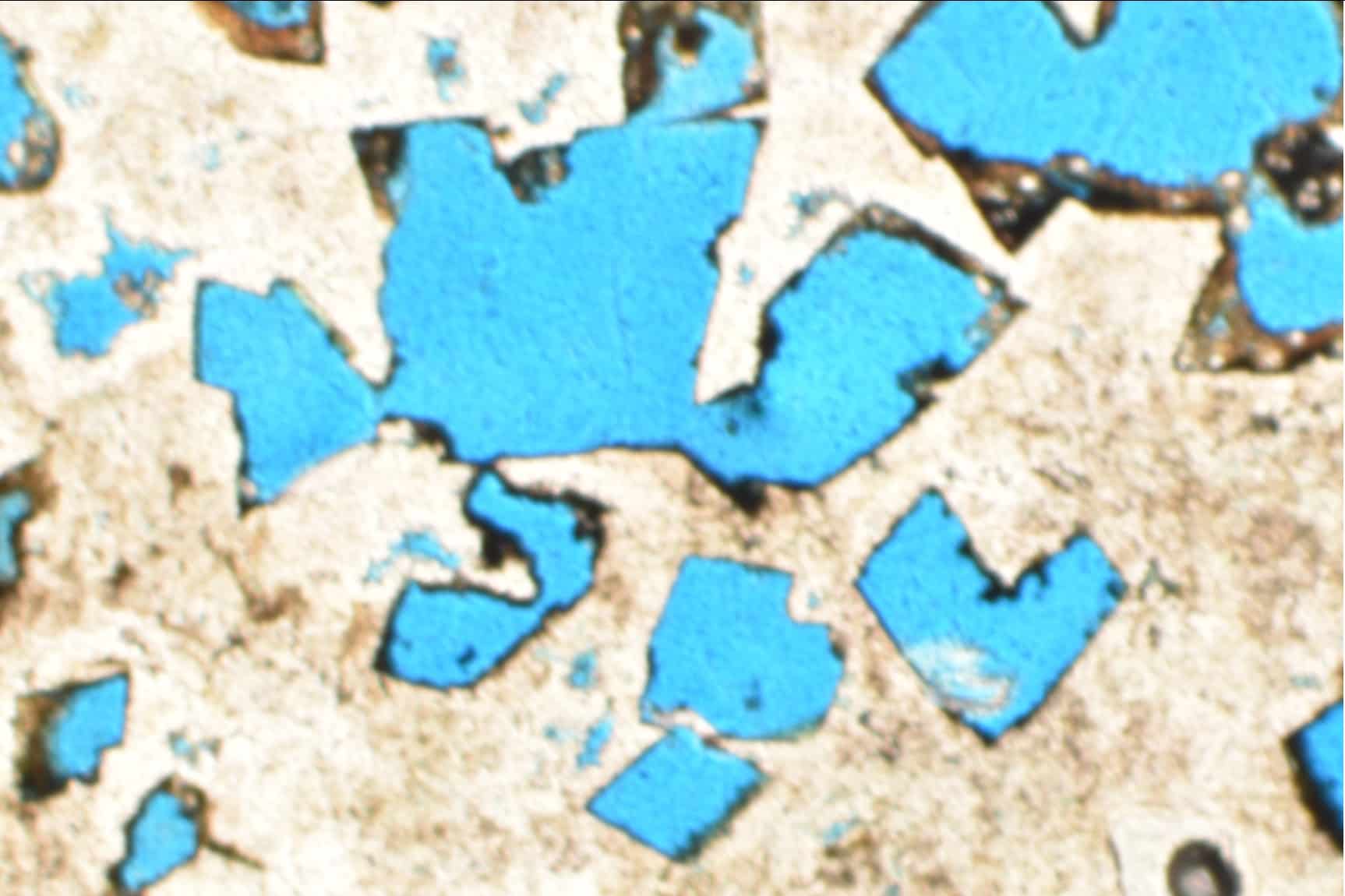
Petrographic analysis showed that the concrete slab has above normal porosity/void in the paste and aggregates used which allows for easy transmission of moisture through it (see Figure G and H).
Armed with this data, we were able to surmise that the probable series of events that cause the seal coat applied to the slab to blister is as follows: The gap underneath the slab acted as a storage space for water to be stored after rain events due to improper perimeter drainage. Water collected at the base of the slab has one easy route of escape – though the porous concrete slab. Areas in the slab where moisture being drawn to the top of the slab becomes excessive results to debonding of the seal coat, which creates blisters on the surface of slab.
Get Expert Answers for Your Concrete Challenges
Not sure what’s causing your concrete issue? Our specialists provide clear, data-backed insights to help you make the right decision fast and confidently.

Consulting Engineers
Concrete Experts
CONTACT INFORMATION
C3S, Inc.
7100 Regency Square Blvd.
Suite 183
Houston, TX 77036