

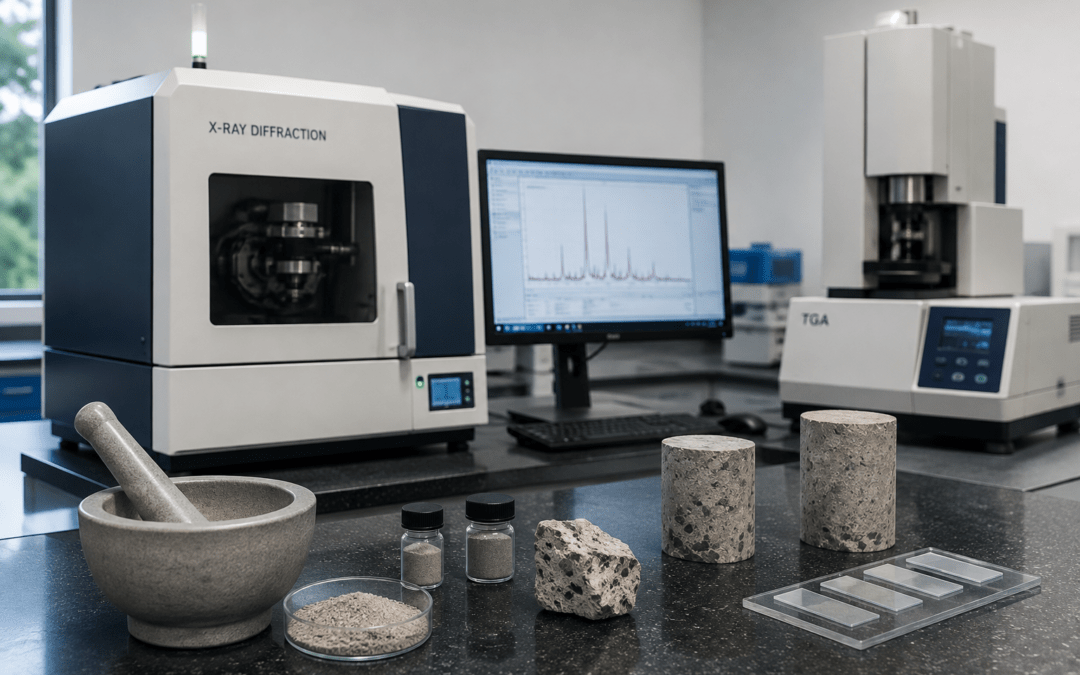
Understanding the Materials Behind Concrete Performance
Concrete is a complex composite material. Its performance depends on the properties and interaction of cementitious materials, aggregates, water, admixtures, and environmental conditions.
C3S, Inc. evaluates concrete materials and material interactions to help identify problems affecting strength, durability, and long-term performance.
Why Cement Chemistry Matters
The chemical and physical characteristics of cementitious materials can influence:
- Setting behavior
- Strength development
- Hydration
- Workability
- Durability
- Shrinkage
- Chemical reactions
- Compatibility with other materials
Variations in material properties or incompatibility between concrete ingredients can contribute to unexpected performance.
Areas of Evaluation
Depending on the project, C3S, Inc. may investigate:
- Portland cement
- Fly ash
- Supplementary cementitious materials
- Slag cement
- Cement hydration
- Chemical composition
- Cementitious material compatibility
- Aggregate characteristics
- Chemical admixtures
- Alkali-related reactions
- Sulfate-related deterioration
Forensic Applications
Materials evaluation can be particularly important when concrete exhibits:
- Unexpected cracking
- Low or inconsistent strength
- Premature deterioration
- Abnormal setting
- Discoloration
- Durability problems
- Unusual surface distress
Scientific Evaluation
C3S, Inc. combines engineering investigation with laboratory and analytical techniques where appropriate to determine whether material characteristics contributed to a concrete problem.
Related C3S, Inc. Services
- Materials Evaluation
- Forensic Investigation
- Concrete Failure Analysis
- Laboratory Testing
- Cementitious Materials Evaluation
Recent Comments